article
The evolving role of the CEO: An interview with Winnie Ma, president of Asia Pacific, VF Corporation
Winnie Ma shares her perspective on the challenges future CEOs will face and offers advice on how to be an inclusive leader.
9 Min Read
Linda Zhang: How do you think the role of CEO will evolve over the next three to five years in response to board and stakeholder expectations? Which do you think will be the most challenging to master?
Winnie Ma: Leading and growing the business in an increasingly uncertain and volatile macro environment is becoming part of the new normal for CEOs. For international companies operating in China and Asia, this means managing the near-term challenges in delivering business targets while also staying laser-focused on the long-term growth strategy in the region and building a future-fit organization to meet ambitious growth targets for the company.
In the short term, CEOs and business leaders need to guide their teams to not only stay focused on the companies’ strategic priorities but also to remain agile in dealing with unexpected disruptions by doing scenario planning. It is important to always have a defense and offense plan in place. In the longer term, CEOs must lead the company in creating value for shareholders and stakeholders through purpose-led actions and products that resonate with consumers.
Linda Zhang: What are the skill sets and experiences you think a global CEO needs today?
Winnie Ma: I don’t think there is a “one size fits all” formula for success in leading a business, and effective leadership requires adapting to different business and team situations. With the constantly evolving consumer dynamics and the added pressure of operating in today’s VUCA [volatile, uncertain, complex, and ambiguous] world, I would highlight the following three critical qualities of a business leader among many others:
- Being big-picture oriented with a clear and well-articulated vision: this requires the business leader to look beyond the day-to-day operations of the company and think strategically about the future, create a vision, and provide a path toward long-term success. He or she needs to be able to look at the company from both a 50,000-foot view as well as a 500-foot view.
- The ability to make decisions amid ambiguity and in unfamiliar domains: agility and a clear direction are more important than perfection and no decision at all.
- Able to adapt proactively: this means dealing with situations that are not in the playbook; be able to spot the trends that will impact the business or even the industry before they do and guide the company to make strategic moves that take advantage of these trends.
Linda Zhang: Considering the impact of new technologies and the high numbers of big digital transformation programs, when do you think digital skills and experiences will become a must-have on the resume of a future CEO?
Winnie Ma: Technologies, digital, and data have already brought profound changes to consumers and businesses. While it’s helpful for the CEO to have digital expertise, what’s even more important is how the CEO sets a vision for the company on digital transformation. The CEO should lead the company in building the right organization with strong capabilities and hire suitable leaders and talents to deliver that vision. This is a key enabler for business growth.
Linda Zhang: To what extent does your company’s culture help or hinder your effectiveness as a leader?
Winnie Ma: Founded in 1899, VF Corporation is one of the world’s largest active-lifestyle companies which connects people to the activities and experiences they cherish most through a portfolio of outdoor, active, workwear, and streetwear brands including Vans, The North Face, Timberland, and Dickies. Our purpose is to power movements of sustainable and active lifestyles for the betterment of people and our planet. We connect this purpose with a relentless drive to succeed to create value for all stakeholders and use our company as a force for good.
Our culture is characterized by 3 Ps: purpose-led, performance-driven, and people first. The company’s purpose and culture resonate very much with me and were one of the key reasons that brought me to VF. Take “purpose-led,” for example. I am a big believer in brand and business purpose driving business growth: “doing well by doing good.” In line with VF’s business purpose, we are building VF to be a purposeful business in Asia by supporting consumers’ participation of outdoor activities and contributing to people’s pursuit of an active and healthy lifestyle. I am proud to see the significant progress that our brands have made in Asia. The North Face, the leading premium outdoor brand in China, for instance, has been activating TNF100 Trail Run in China for 13 years. This race has attracted not only athletes attending the event, but also beginner runners who are interested in learning to trail run.
Earlier this year, we launched the very creative TNF Urban Rider in Shanghai downtown and held a snowboarding event in Taikooli shopping mall. The event brought snow activities closer to our consumers who may not have had access to it previously and ignited their interest in snow sports.
Vans, the original action sports footwear and apparel brand grounded in youth, authenticity and individual style, has also been supporting community skateboarding. In collaboration with Tmall, we have held skateboarding activities across universities in China and launched the first online skate community in Tmall. In partnership with skate athletes, we have organized entry-level skate classes for young people in many cities in China.
Linda Zhang: What would you say were the biggest challenges of your career? How did you overcome them?
Winnie Ma: I did not start my career with the ambition of becoming the president or CEO of an international company in Asia. To me, my career development has always been a journey of self-discovery, learning, and improvement. Every shift on this journey, from sales to marketing and to general management, required courage. Courage allows me to have the determination to step outside of my comfort zone and become mentally prepared for bigger challenges and even failure. The key motivation for me has always been my curiosity about an unknown world and my aspiration to bring a positive impact to the businesses and teams that I serve. I am also very grateful to my team, my line managers, and my mentors who went on this journey with me, for all their support, patience, and guidance.
Linda Zhang: What is an “inclusive culture” to you? What steps have you taken to become a more inclusive leader and to build a more inclusive culture?
Winnie Ma: Being a woman myself, I was fortunate enough to be brought up in a family where I never felt constrained by my gender in pursuing my dreams and passions. I was always told, when I was a girl, that women hold up half the sky. While gender equality has gained much support over the past decade or so, I realize that not every woman was treated the same way as me, and I truly believe it’s my responsibility to contribute to creating an inclusive and equitable world where everybody has the opportunity to be his or her best self.
I am very fortunate to work at VF where IDEA (inclusion, diversity, equity, and actions) is an important part of our associates’ culture and also emphasized at a brand and consumer level. In addition to creating a respectful, inclusive, equitable, and accessible workplace, I believe that IDEA also drives our business forward and compels us to innovate and expand.
Together with my leadership team, we have been driving IDEA in VF APAC through three key actions:
- Our VF associates through the lens of culture
- Our consumers through the actions of our brands
- Communities where we live and work through societal movement
On driving IDEA among our associates, I am very proud to share that as of Q4 FY’22 our overall women representation in APAC (including retail) reached 63.6% and at the senior leadership level (Director +) 47.2%. We have established our ERG network for Women called WOVEN (Women in VF Empowerment Network) in APAC across Singapore, Malaysia, Vietnam, South Asia (India, Bangladesh, and Cambodia are being added to this soon), Dalian, South China (Guangzhou, Zhongshan, and Hong Kong) and Shanghai. WOVEN is led by strong women leaders but it is also important to note that they are actively supported by male allies. We have organized activities in WOVEN focusing on career development, awareness, and support on mental health and well-being, an area that required particular focus during the pandemic. We like to take every opportunity to recognize and celebrate success stories from within and encourage our women associates to stretch far beyond their comfort level, in order to learn, grow and thrive.
Linda Zhang: What advice do you have for other leaders who are looking to step into CEO roles?
Winnie Ma: Start to cultivate a CEO mindset in your current role. Go beyond your own function or role in assessing and tackling your business issues and opportunities. Stakeholders’ engagement and influence are critical—they are the key enabler for you to be successful when leading a team. Build a strong and resilient mind and body, and always find your way to recharge and refresh. It’s even better if you can do so by exploring the outdoors and nature.
About the interviewer
Linda Zhang (lzhang@heidrick.com) is the partner in charge of Heidrick’s Shanghai office and leads the firm’s CEO & Board of Director's Practice in China. She is also a member of the Consumer and Industrial practices.
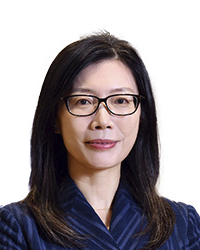
Winnie Ma is the president of Asia Pacific at VF Corporation, an apparel company. She is responsible for driving the overall business strategy and development for the Asia Pacific region and leading the company to achieve sustainable long-term development across APAC.
Winnie has more than 23 years of management and hands-on experience and is able to share her insights and expertise in consumer consumption, brand strategy, and digital transformation. She first joined VF in August 2020 as president, Greater China and was promoted to president, Greater China & Southeast Asia in April 2021. In March 2022, Winnie was appointed president of Asia Pacific at VF Corporation.
Prior to joining VF, Winnie has held several leadership roles in multinational companies. She was vice president of Beauty & Personal Care at Unilever North Asia and was responsible for enhancing the core brands’ business and boosting their digital transformation strategy. Prior to that, Winnie held various branding, sales, and marketing roles for brands including Mars China and The Coca Cola Company.
Related Content
- Read More
Report
Guide to Working with On-Demand Talent
- Read More
Gender inclusivity in the pharmaceutical industry: An interview with Kanako Kikuchi, president of UCB Japan
Kanako Kikuchi, president of UCB Japan, discusses her career journey and offers advice to young female leaders on advancing their careers. - Read More
Leadership perspectives: An interview with Lawrence Lam, CEO of Prudential Hong Kong
Lawrence Lam, CEO of Prudential Hong Kong, discusses the path to becoming CEO and offers advice to aspiring leaders.
- Read More
Leadership, breaking through, and the value of communications: An interview with Sally Susman, chief corporate affairs officer of Pfizer
Sally Susman shares her insights on what skills are most important as a leader, particularly a communications leader, as well as the value in humanity, humility, and humor. - Read More
Bonus conversation: Trends in private equity talent needs across North America
This short, bonus episode features Heidrick's partners Jason Henderson and Sean McLean as they discuss the trends they are seeing in private equity talent. - Read More
Energy, policy, and purpose: A conversation with Jennifer Granholm, former US Secretary of Energy
Jennifer Granholm discusses what leadership looks like in the context of the global energy transition.
- Read More
How the general counsel role is changing in 2023
Four sitting general counsels share their insights on how current and aspiring GCs can be most effective as their role continues to expand and shift. - Read More
The connecting leader: Five imperatives for leaders today
How are leaders around the world leveraging connecting capabilities to help their organizations thrive? Our research shows that effective leaders share core capabilities rooted in authentic connection—the ability to inspire, influence, learn, adapt, and support their team’s professional growth. By unifying diverse teams, guiding change, and fostering growth, they create positive impact for all stakeholders and elevate their teams, organizations, and ecosystems in both the short and long term. These leaders leave a lasting legacy on their people, their organizations, and the world. - Read More
First-time chief people officers: A guide from current to future chief people officers
The chief people officer (CPO) report outlines the step changes that people face when they get into the CPO role, some of which they may previously have considered, and others that fall far outside their sphere of experience.

- Read More
Chief people officer monitor: Building HR functions that are effective <em>and</em> strategically influential
CPOs say their functions are, on the whole, moderately successful at both traditional HR activities and having strategic influence, according to a recent survey and insights from leading CPOs in markets around the world. The research suggests a few priorities for focus as CPOs reshape their functions for the future. - Read More
Chief people officer focus: How CPOs in the Middle East are evolving the HR function
As the competition for talent heats up in the Middle East, companies are seeking greater alignment between their business goals and people priorities and are repositioning their HR function closer to the decision-making center. Insights from HR leaders across the region highlight key focus areas and competencies to succeed - Read More
Biotech focus: Finding CFOs for booming companies
For fast-growing biotech firms, CFOs with public company experience are increasingly important—and difficult to find. CEOs and boards who rethink where to find that expertise are more often finding the people they need, and finding them faster.

- Read More
Creating next-generation CHROs
The role of the CHRO is changing fast. We offer five lessons from some of the world’s most digitally enabled human resources leaders. - Read More
Article
Route to the Top 2020: Interview with Guillaume Boutin, CEO of Proximus
Proximus CEO Guillaume Boutin discusses the evolving role of the CEO and the organizational cultural changes in relation to digitalization. Author(s): Heidrick - Read More
Article
Route to the Top 2019: Interview with Severn Trent CEO Liv Garfield
Liv Garfield, CEO of Severn Trent, shares her thoughts on the challenges she has faced and lessons learned and how she sees the CEO role evolving.
- Read More
Leading across boundaries: Four approaches leaders are taking today in context
Dig deeper into four approaches to leading across boundaries and how they vary by market, company ownership, sector, and size. - Read More
The composition of US unicorn 100 executive teams: A first look
Our first study of key roles on the executive teams of US unicorns—start-ups valued at least $1 billion at the end of 2022—finds a different mix of racial and ethnic diversity than at Fortune 100 companies and a higher tendency to hire externally. - Read More
Article
Route to the Top 2020: Interview with Jean-Christophe Tellier, CEO of UCB
Jean-Christophe Tellier, CEO of global biopharmaceutical company UCB, discusses the evolving role of the CEO, the impact of COVID-19 on the industry, and UCB’s sustainability agenda.

- Read More
Chief sustainability officer focus: A European CSO perspective on driving the sustainability agenda
What makes the chief sustainability officer role effective and who makes an excellent candidate? We spoke to 17 chief sustainability officers from leading European companies to find out. - Read More
Supply chain leadership in Europe: Where are the women?
Based on our own work and discussion with 12 female leaders in European supply chain functions, we recommend leaders reflect on three questions as they seek to improve gender balance among their supply chain leaders.